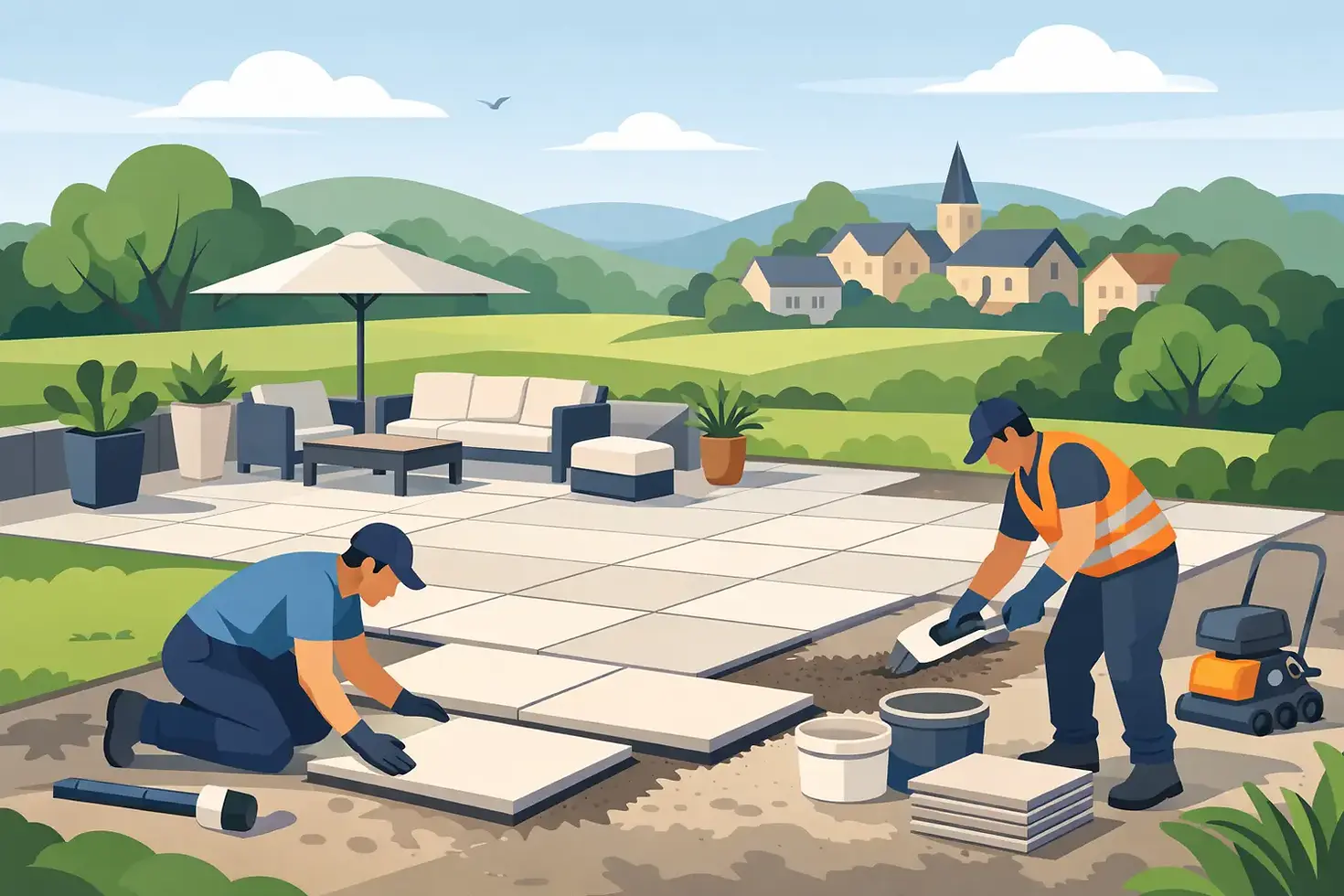
Porcelain Patio Installation in Burgess Hill
- XtremeCraftLandscaping
- Jul 6
- 6 min read

A porcelain patio can look superb on day one and still cause problems six months later if the groundwork is wrong. That is why porcelain patio installation in Burgess Hill is not just about choosing attractive slabs. It is about getting the base, drainage, falls and finish right so the patio stays level, drains properly and keeps its clean appearance over time.
For many homeowners, porcelain is appealing for a simple reason. It gives a sharp, modern finish without the ongoing upkeep that some natural materials need. It suits contemporary gardens, but it can also sit well in more traditional spaces when the colour and layout are chosen carefully. The result should feel like a proper extension of the home, not a hard surface that has simply been dropped into the garden.
Why porcelain is such a popular patio choice
Porcelain has become one of the most requested patio materials in Burgess Hill because it combines appearance with practicality. The surface is dense, durable and generally easier to keep clean than many alternatives. If you want a patio that looks tidy for longer, especially around busy family gardens, outdoor dining areas or spaces with pets, porcelain makes a lot of sense.
It is also consistent. With natural stone, colour variation and surface texture are part of the appeal, but they can be less predictable. Porcelain offers a more controlled finish. That is ideal if you want clean lines, a modern layout and a patio that complements newer doors, rendered walls or landscaped planting schemes.
That said, porcelain is not forgiving during installation. Because the slabs are precise and usually have very straight edges, any weakness in the groundwork or any inconsistency in levels tends to show. A poor job is easier to spot. That is why the installation matters just as much as the product itself.
What proper porcelain patio installation in Burgess Hill involves
A good patio starts well below the surface. The visible slab is only one part of the build. Before any porcelain is laid, the area needs to be excavated to the correct depth, cleared properly and prepared with a solid sub-base. If the ground preparation is rushed, movement can show up later as rocking slabs, open joints or standing water.
The base must be compacted thoroughly and built to suit the site conditions. Gardens in and around Burgess Hill can vary quite a bit. Some plots drain well, while others hold water or sit unevenly. Existing surfaces, access routes and surrounding structures all affect how the patio should be built. There is no single method that works for every garden.
After the sub-base comes the bedding layer and the setting out. This is where precision matters. Porcelain needs full support beneath each slab, not spot bedding. It also needs the right falls so water moves away from the property rather than sitting on the surface or collecting near thresholds. A patio can look flat to the eye while still being built to shed water correctly. That balance is part of good workmanship.
Drainage, levels and why they matter more than colour samples
Most people understandably focus first on the slab they like the look of. Colour, size and finish are important, but levels and drainage are what determine whether the patio performs well. A patio that puddles after rain, sends water towards the house or leaves awkward steps between surfaces becomes frustrating very quickly.
In many gardens, drainage needs to be considered as part of the wider layout. That may mean adjusting falls, incorporating channels or tying the new patio into existing groundworks. If the garden already has issues with surface water, it is better to deal with that during the installation rather than trying to fix it after the slabs are down.
This is where having one contractor handle both the patio and any associated groundworks is often a real advantage. It avoids the stop-start approach where one problem gets passed from trade to trade. The best outcome usually comes when the patio is treated as part of the whole garden, not as a standalone feature.
Choosing the right porcelain for your garden
Not all porcelain slabs are the same. Some are better suited to high-traffic family gardens, while others are chosen mainly for appearance. The right option depends on how the space will be used.
For example, a garden used for entertaining may benefit from larger format slabs and a cleaner, more contemporary joint pattern. A family garden with children, pets and regular furniture movement might need a finish that balances style with practicality. Slip resistance, ease of cleaning and how the slab looks in different light all matter.
The shade you choose also affects the final result more than many people expect. Very pale porcelain can look striking, but it may show general dirt more quickly. Darker tones can feel smart and grounded, though they can make smaller spaces appear a little tighter if the surrounding garden is already enclosed. Mid-greys, soft stone tones and warmer neutrals are often popular because they give a clean finish without feeling harsh.
The difference between a quick fit and a lasting job
A porcelain patio is not the place to cut corners. The material itself is a premium choice, so it makes little sense to invest in quality slabs and then compromise on the installation. What you are really paying for is not just the paving, but the confidence that the whole area has been built properly.
That includes accurate cuts, neat edges, consistent jointing and a finish that works with the rest of the garden. It also includes the less visible parts of the job - excavation, compaction, base build-up and careful preparation around walls, drainage points and thresholds. Those details are what make the difference between a patio that still looks right years later and one that needs remedial work far too soon.
There is also the practical side of living through the project. Homeowners usually want clear communication, a tidy site and a team that turns up when expected. A good installation should feel organised from the first visit through to completion. That matters just as much as the paving itself.
Porcelain patios and the wider garden design
The strongest patio installations usually work as part of a wider plan. A new porcelain surface can transform an outdoor space on its own, but it often works even better when combined with other improvements such as new fencing, sleeper beds, brick edging, retaining walls, drainage upgrades or fresh turf.
In some gardens, the patio is the main event. In others, it is the anchor that ties everything else together. Getting the size and position right is just as important as the finish. A patio that is too small can feel cramped. One that is too large for the plot can leave the garden looking hard and unbalanced. The layout should suit how you actually use the space, whether that is family meals outside, a seating area in the sun, or a practical route between house and lawn.
That is one reason many homeowners prefer working with a company that understands full garden improvement work, not just slab laying. If the levels, boundaries and surrounding features are considered from the start, the finished result tends to feel more complete.
What homeowners in Burgess Hill should expect from the process
A straightforward process makes a big difference. First comes the site visit and discussion about what you want from the space. That includes the look, the practical use of the patio and any issues with the current area, such as poor drainage, uneven ground or old paving that has started to fail.
From there, the job should be planned properly. That means clear advice on materials, layout and preparation, rather than vague promises. If extra works are needed, such as drainage adjustments or retaining edges, they should be identified early.
During installation, the focus should be on careful groundwork and a clean finish. When the patio is complete, it should feel solid underfoot, drain properly and sit neatly against the property and garden edges. It should also be easy to maintain. One of porcelain's biggest advantages is that once it is installed correctly, ongoing upkeep is relatively simple.
For local homeowners wanting a reliable, well-built result, XtremeCraftLandscaping approaches each patio with that bigger picture in mind - workmanship first, clear communication throughout, and a finish built to last.
Is porcelain always the right choice?
Not always. It depends on the style of garden, the budget and the finish you want. Some homeowners prefer the character of natural stone, especially in older properties or cottage-style gardens. Others want the crisp, low-maintenance look that porcelain provides.
The key is choosing a material that suits both the property and the way you live. A patio should not just look good in photos. It needs to work in real conditions - wet weather, muddy shoes, garden furniture, family use and everyday maintenance.
If you are considering porcelain patio installation in Burgess Hill, the best starting point is to think beyond the slab sample. Focus on how the space needs to function, how the groundwork will be handled and whether the installation will be built properly from the base up. Get that right, and the finished patio will do exactly what it should - give you an outdoor space that looks smart, feels solid and stays that way.


Comments